

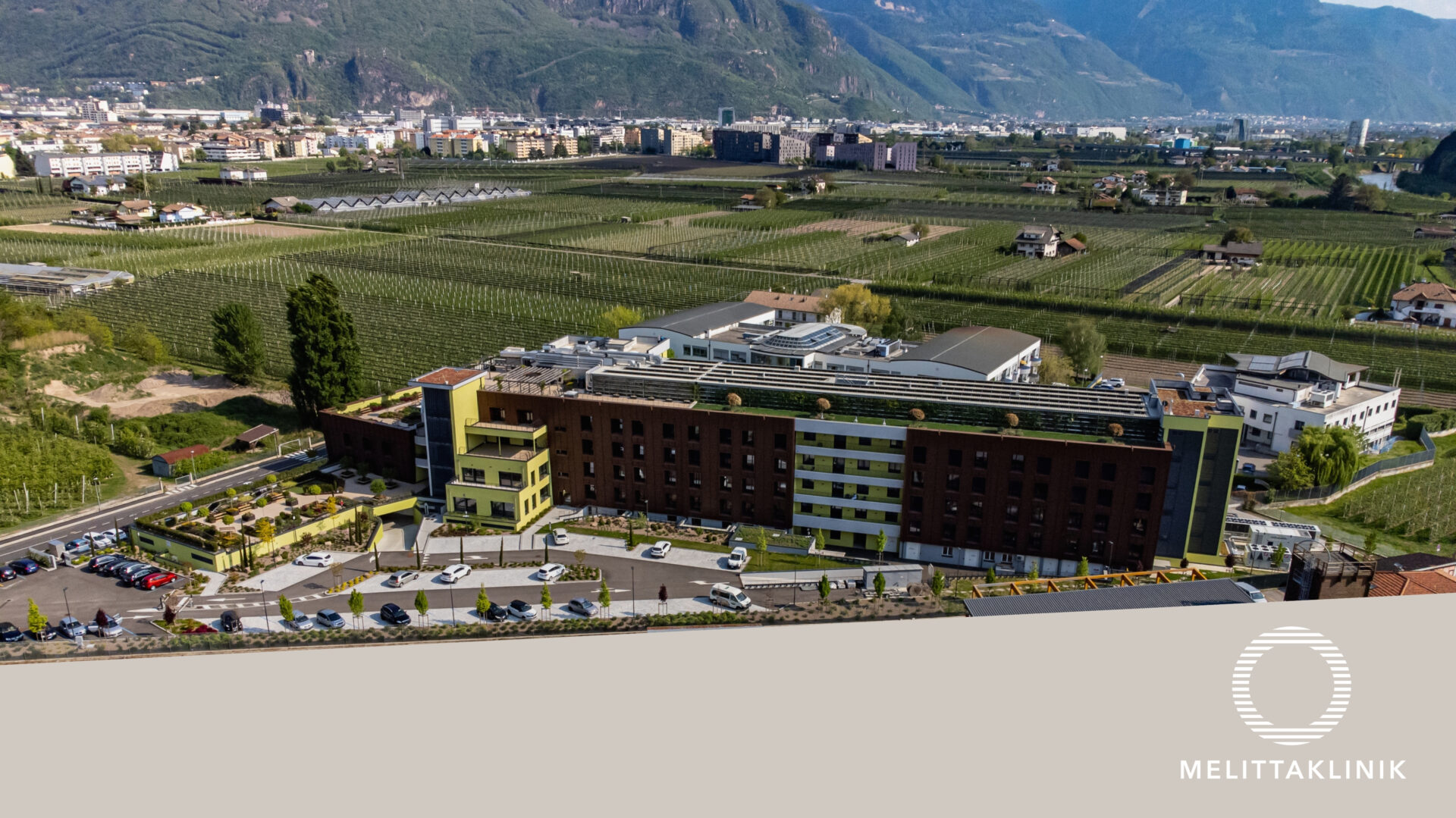
Technology, prevention and closeness to people: a new care model for people over 80 with chronic conditions in South Tyrol
Innovation in healthcare does not simply mean introducing new technologies. Above all, it means using them to bring care closer to people, identify needs at an early stage and develop care pathways that support patients in their daily lives.
This vision gave rise to “Vivere Meglio Digitale”, the project with which Melittaklinik successfully responded to the public call for proposals issued by AGENAS – Italian National Agency for Regional Healthcare Services, as part of initiatives dedicated to telemedicine and the care of older people with chronic conditions.
The project ranked fifth in Northern Italy, securing funding of 1,100,000 euros.
A significant achievement that will make it possible to develop an innovative care model in South Tyrol, in which digital tools, health monitoring and personal interaction become parts of a single pathway.
Index
411 people over 80 involved in South Tyrol
“Vivere Meglio Digitale” will run for 18 months and will involve 411 people over 80 residing in the Autonomous Province of Bolzano, with particular attention to people living with chronic conditions.
The goal is to go beyond simple remote monitoring.
The project provides for an integrated model in which remote assistance, remote monitoring and digital support work together to promote greater continuity of care and help maintain people’s independence and quality of life.
Technology thus becomes a tool for bringing care closer to people: it does not replace human interaction, but makes it more continuous, timely and responsive to everyday needs.
Three goals to improve quality of life
As people age, managing a chronic condition may become intertwined with other vulnerabilities affecting their physical, psychological, cognitive and social well-being.
For this reason, “Vivere Meglio Digitale” addresses three closely interconnected dimensions.
Combating social isolation
Loneliness and fewer opportunities for social interaction can have a significant impact on the well-being of older people.
The project includes activities and tools designed to maintain active engagement with each person and foster opportunities for participation and social interaction. Care is therefore viewed from a broader perspective, considering health not only as the absence of illness, but also as psychological and relational well-being.
Improving treatment adherence
Adhering correctly to treatment is essential, especially when living with one or more chronic conditions.
Through monitoring and structured support, the project aims to promote more informed and continuous management of the treatment pathway, facilitating the monitoring of certain parameters and helping to identify more quickly any situations requiring attention.
Preventing cognitive decline
Keeping cognitive abilities active is another key factor in preserving autonomy and quality of life for as long as possible.
For this reason, alongside health monitoring activities, the project will offer specific initiatives dedicated to cognitive stimulation, integrated with physical activity and opportunities for social interaction.
From vital signs monitoring to psychological support
One of the distinctive aspects of “Vivere Meglio Digitale” is the multidimensional nature of the intervention.
Participants will have access to a coordinated set of services that includes psychological support, vital signs monitoring through medical devices, structured physical activity, cognitive stimulation and initiatives dedicated to socialisation.
Digital technology therefore becomes the infrastructure that connects different forms of care.
This is not simply about collecting data remotely, but about building a pathway around each person that simultaneously takes into account physical health, psychological well-being, cognitive abilities and social relationships.
Telemedicine that keeps the person at the centre
The growing use of telemedicine is opening up new possibilities in the care of people with chronic conditions, especially when frequent travel can become difficult.
However, for innovation to deliver real benefits, technology must be simple, accessible and integrated into a care model built around the person’s needs.
This is the perspective underpinning “Vivere Meglio Digitale”: using digital tools to strengthen the care relationship, not replace it.
Remote monitoring and remote care make it possible to extend the healthcare pathway beyond the traditional clinical setting, creating greater continuity between care, prevention and everyday life.
This is particularly significant for older people, for whom being able to receive support without frequent travel can make a tangible contribution to the quality of their care experience.
Healthcare innovation serving South Tyrol
For Melittaklinik, “Vivere Meglio Digitale” is also a project with strong ties to the local area.
Involving more than four hundred people over the age of 80 from the Autonomous Province of Bolzano means putting into practice a care model that starts from the needs of South Tyrol’s population and looks ahead to the changes that will increasingly shape healthcare in the coming years.
The ageing population and the growing prevalence of chronic conditions require models capable of integrating healthcare facilities, community-based care, prevention and new technologies.
In this context, digital innovation can become a valuable tool for developing healthcare that is increasingly preventive, personalised and close to the person.
Research, technology and humanity: Melittaklinik’s vision
Participation in “Vivere Meglio Digitale” is part of Melittaklinik’s ongoing commitment to research, technological innovation and the development of new care models.
A vision in which progress in medicine is measured not only by the availability of increasingly advanced technologies, but above all by their ability to deliver tangible benefits in people’s lives.
With “Vivere Meglio Digitale”, this vision enters directly into the homes and daily lives of hundreds of older people in South Tyrol.
Technology, prevention and proximity thus become parts of the same pathway: helping people live better, longer and with the greatest possible autonomy.





