

Intermittent Hypoxia-Hyperoxia Training (IHHT) is a method based on the controlled alternation of brief phases in which air with a reduced oxygen concentration is inhaled and subsequent recovery phases with increased oxygen availability. The aim is to make controlled use of the body’s natural ability to adapt to changes in oxygen availability, generating a physiological stimulus that can be incorporated into rehabilitation, functional recovery and physical reconditioning programmes. At Melittaklinik in Bolzano, IHHT is incorporated into a clinical, multidisciplinary approach: not as a stand-alone treatment, but as a potential complement to physiotherapy, therapeutic exercise and the other interventions included in the patient’s individual programme.
Intermittent hypoxia-hyperoxia treatment (IHHT) in Bolzano
Innovative support for rehabilitation and functional recovery programmes
Training the body’s ability to adapt
A controlled physiological stimulus to support recovery
The principle of adaptation to oxygen
When oxygen availability is temporarily reduced, the body activates a series of adaptive responses. IHHT applies this principle through brief, controlled exposures alternating with hyperoxic recovery phases.
The hypoxic phase provides the adaptive stimulus, while the subsequent hyperoxic phase supports recovery. This alternation is repeated during the session according to defined parameters tailored to the individual response. The method is performed under normobaric conditions and therefore does not require a hyperbaric chamber. IHHT is different from hyperbaric oxygen therapy, which involves breathing oxygen in a pressurised environment.
Recovering without increasing mechanical load
Why choose IHHT as part of a rehabilitation programme
One of the most notable aspects of IHHT in rehabilitation is its ability to provide a physiological stimulus even during phases when the patient is not yet able to tolerate high exercise loads. The method can therefore be used during recovery after surgery, hospitalisation, trauma or a period of immobilisation, as well as in sports rehabilitation and programmes for people with reduced aerobic capacity, fatigue or decreased exercise tolerance. When integrated with physiotherapy and therapeutic exercise, IHHT can contribute to the gradual recovery of functional capacity and a controlled return to everyday or sporting activities.
”Recovery does not simply mean being able to move again. It means helping the body gradually regain its ability to adapt to exertion.
A treatment tailored to the individual
What happens during an IHHT session
Before starting the programme, an assessment is carried out to determine whether the treatment is appropriate and to define a protocol compatible with the patient’s condition and goals. During the session, cycles of controlled hypoxia alternate with hyperoxic recovery intervals. The treatment includes an initial adaptation phase and a final stabilisation phase under normoxic conditions.
Under the protocol proposed for Melittaklinik, a single session generally lasts 30–45 minutes. The programme may extend over 4–8 weeks, usually with 2–3 sessions per week, potentially combined with supervised light exercise. Duration, frequency and intensity are always tailored to the individual response.
Continuous monitoring during treatment
Safety begins with clinical assessment
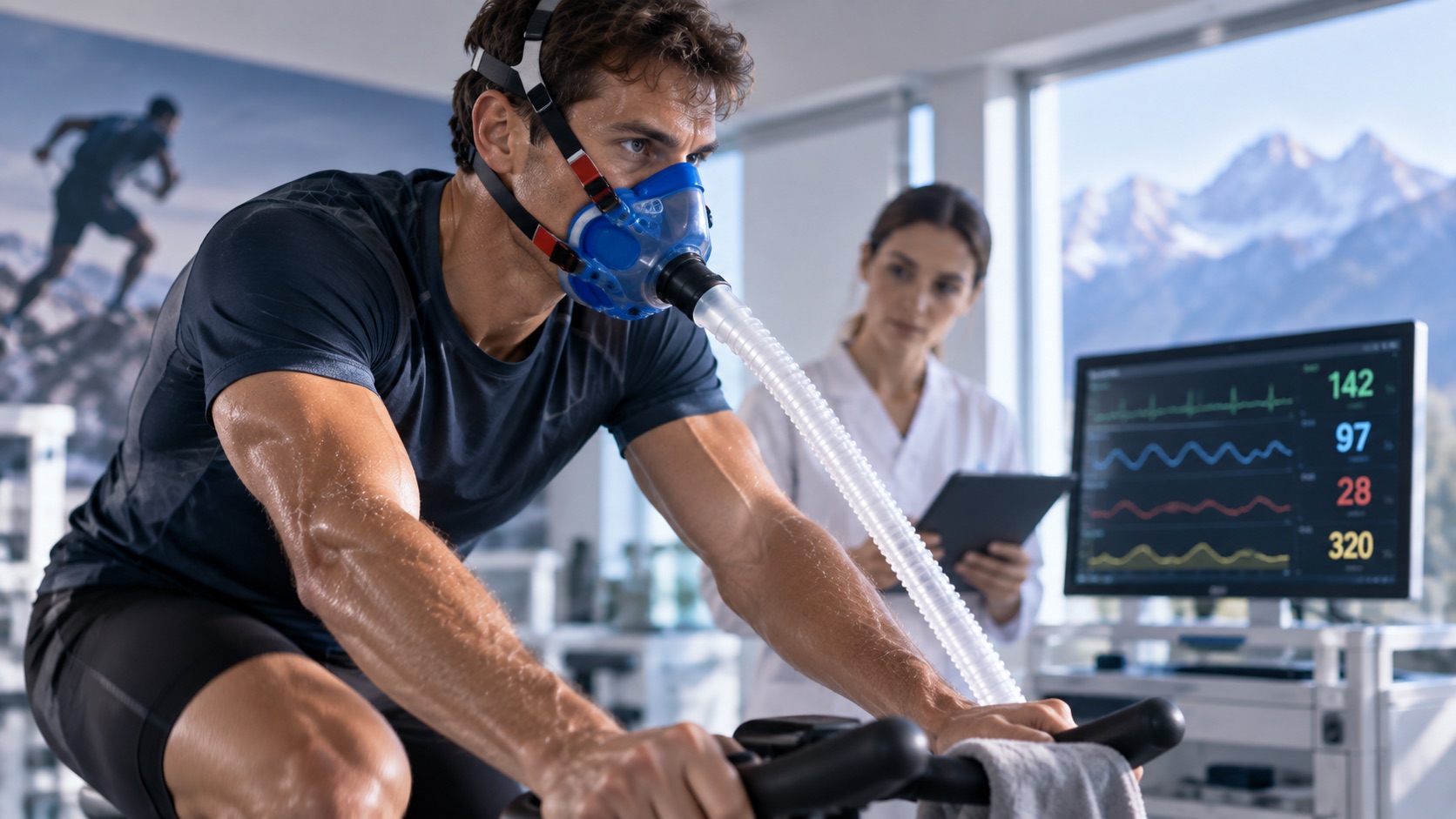
At Melittaklinik, IHHT is administered in a healthcare setting. During sessions, parameters such as oxygen saturation (SpO₂) and heart rate are monitored, along with the patient’s response and reported symptoms. The protocol can be modified or discontinued in the event of intolerance. The preliminary assessment also makes it possible to identify any contraindications and determine whether the treatment is appropriate for the individual patient.
From post-operative rehabilitation to sports recovery
Different programmes, a personalised approach
IHHT can be integrated into various rehabilitation programmes.
In post-hospital recovery, it can support patients who experience muscular deconditioning, fatigue, reduced aerobic capacity or lower exercise tolerance following surgery, prolonged hospitalisation or a period of immobilisation. In orthopaedic and musculoskeletal rehabilitation, it can complement post-prosthetic, post-fracture, post-ligament and post-arthroscopy programmes, as well as programmes for conditions characterised by physical deconditioning.
In sports rehabilitation, it can be used during recovery from injury or surgery, after periods of immobilisation or detraining, and during the gradual return to sporting activity. The scientific research reviewed as part of the Melittaklinik project also considers applications of IHHT in cardiology, metabolic medicine and geriatrics. Its suitability must, however, always be assessed on the basis of the individual’s clinical condition.
Not a stand-alone therapy, but part of the recovery programme
The Melittaklinik method applied to IHHT
The value of IHHT lies not only in the technology used, but also in how it is incorporated into the therapeutic programme. At Melittaklinik, it can be integrated with physiotherapy, therapeutic exercise, physical and rehabilitation medicine, and any other specialist expertise required, with functional goals being defined and the response to treatment reviewed over time. This keeps the focus on the individual rather than on a single treatment: each protocol is incorporated into a programme designed around individual needs, abilities and goals.
Regaining capacity, energy and independence
Support for returning to everyday life
The outcomes considered in IHHT protocols include aerobic capacity, exercise tolerance, fatigue, neuromuscular recovery and perceived quality of life. The programme can be monitored using parameters and functional tests, allowing the team to track the patient’s progress over time and adjust the programme when necessary. The objective remains the one that guides Melittaklinik’s entire rehabilitation approach: to support each person in regaining the greatest possible degree of independence and functional capacity.
What is IHHT and how does it work?
IHHT (Intermittent Hypoxia-Hyperoxia Training) is a method that alternates brief periods of breathing air with a reduced oxygen concentration with recovery phases involving greater oxygen availability. This controlled alternation aims to stimulate the body’s natural adaptation mechanisms and can be integrated into rehabilitation and functional recovery programmes.
How long does an intermittent hypoxia-hyperoxia session last?
An IHHT session typically lasts 30–45 minutes. The protocol proposed by Melittaklinik generally involves 2–3 sessions per week over a period of 4–8 weeks. However, the frequency, duration and characteristics of the treatment are adapted to the patient’s condition and individual response.
Which rehabilitation programmes can include IHHT?
IHHT can be integrated into post-hospital recovery, orthopaedic and musculoskeletal rehabilitation, and sports rehabilitation programmes. It can provide support, for example, following surgery or periods of immobilisation, or in cases of physical deconditioning, fatigue and reduced exercise tolerance. It is not regarded as a stand-alone therapy, but as a complementary method to be included in a structured rehabilitation programme.
Is IHHT the same as hyperbaric oxygen therapy?
No. In hyperbaric oxygen therapy, the patient breathes oxygen in a pressurised environment. IHHT, by contrast, alternates air with lower and higher oxygen concentrations in a controlled manner, generally at normal atmospheric pressure. It therefore does not require a hyperbaric chamber and is based on a different therapeutic principle.
Is IHHT treatment safe?
When performed according to appropriate protocols and under medical supervision, IHHT has a good safety profile. The patient is assessed before treatment, and parameters such as oxygen saturation (SpO₂) and heart rate are monitored during the sessions. The treatment may be contraindicated in the presence of certain clinical conditions; suitability must therefore be assessed on an individual basis.
Is physical activity required during treatment?
The protocol may include supervised light exercise, but the programme is tailored to the patient’s condition and goals. One of the particularly valuable aspects of IHHT in rehabilitation is its ability to provide a physiological stimulus even when the individual is not yet able to tolerate high exercise loads.





